




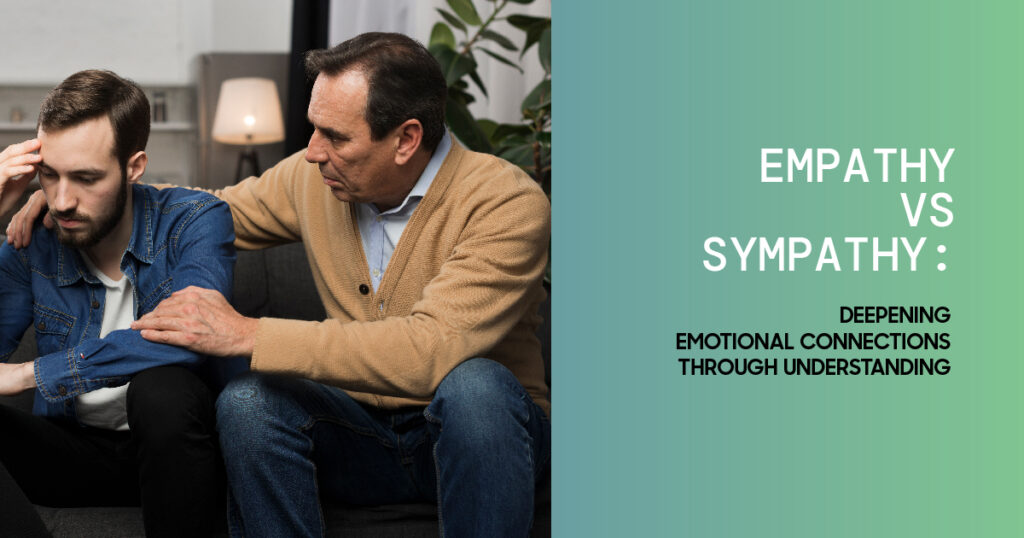
The importance of self-awareness and awareness of others’ feelings is a determinant of healthy social relationships, especially among adolescents in tricky social settings. Sympathy vs. empathy is not always easy to differentiate, but the ability to understand the difference can greatly improve relationships, emotional intelligence, and personal growth.
This guide will discuss these significant emotional concepts, practical examples, differences, and how emotional intelligence can be enhanced among adolescents.
Understanding Sympathy vs Empathy in Everyday Emotional Moments
Feelings do not exist as mere individual experiences, but they define the way we relate to others. Being aware of whether we are feeling sympathy or empathy can affect our reaction when approached by our friends, relatives, and fellow members of society.
Adolescents are hardly able to distinguish between these emotions since both relate to the process of taking care of another person, yet the layers of attachment and the intangible involvement are different.
The Core Definitions and Why These Feelings Often Get Confused
The sympathy definition and empathy definition may sound the same. Sympathy is the concern or sadness of another person about their misfortune, and empathy is the act of putting yourself in the place of another person facing misfortune and experiencing what they are going through. The fact that both stimulate supportive behavior is confusing, and empathy needs a more personal approach, which involves a greater level of emotion.

Sympathy Definition: What It Means to Feel Concern for Someone
Sympathy is the practice of identifying with the plight of someone and giving comfort without necessarily putting yourself in their place. It is one of the means of caring and recognizing the challenges of a person.
Sympathy Examples That Show How We Offer Support
The following are typical examples of sympathy:
- Saying to a classmate, “I am sorry that you have to experience this.”
- This is assisting in a helpful way, such as cooking a meal for someone in need.
These behaviors show that you are aware of the misery of another person and would like to offer some kind of assistance, but not to be engrossed in the emotional state of the person in their state of misery.
Empathy Definition: Stepping Into Someone Else’s Experience
Empathy does not merely mean knowing how another person is suffering – it involves understanding how they feel in their predicament. In empathy, you would be in a position to respond in a way that would be personally touching and affirmative.
Empathy can be used to build trust and honest communication and to improve emotional bonds. Greater Good Science Center explained that empathy is one of the important skills to be acquired by teens and adults, as it boosts social cohesion and personal development.
Key Differences in Empathy vs Sympathy and Why They Matter
The differences between empathy and sympathy can help teenagers manage their social interactions better. Take into account the following table that puts emphasis on the differences:
| Aspect | Sympathy | Empathy |
| Emotional Engagement | Concern without shared feelings | Deep connection, experiencing feelings |
| Response Style | Offering comfort or help | Understanding perspective and validating feelings |
| Emotional Depth | Surface-level understanding | Immersive, personal understanding |
| Typical Expression | “I feel sorry for you.” | “I can imagine how that feels.” |
This difference is important as empathy enables closer interpersonal relationships and emotional helping, whereas sympathy tends to remain more distant and impersonal.
Showing Empathy: How Teens Learn to Connect More Deeply
Empathy is a skill that can be developed through experience and self-reflection. Adolescents who understand how to be empathetic will be in a position to settle conflicts, support friends, and form nice relationships. Some of the strategies include active listening, expression of feeling, and asking probing questions to understand a person’s opinion.
Understanding Empathy Through Real-Life Situations
- Listening to a friend and letting them talk about their struggles without interruptions or immediate solutions.
- Giving back to causes that expose you to different experiences encourages emotional understanding.
- The ability to contemplate your own emotions and project them onto the emotions of other people.
Through such exercises, a stronger degree of emotional intelligence is established, and the teens are encouraged to respond in a non-judgmental way.
Feeling Sympathy: Its Role in Care, Comfort, and Emotional Awareness
Though empathy is what triggers great understanding, sympathy is not a lesser factor in the development of emotions. Sympathy is a way to make the teens aware of distress, be kind, and comfort them, even without necessarily experiencing the feelings of another person. A case in point is that of the necessity to acknowledge a grieving friend following a difficult test with a straightforward, “I am here with you,” that will reinforce the feelings.
Strengthening Relationships Through Healthy Emotional Understanding
Empathy and sympathy are two key aspects required in the cultivation of relationships. Where empathy adds emotional connections by providing a strong bond, sympathy makes support available and loving.
The ability to differentiate such emotional responses can help adolescents manage friendships, their connection with the family, and social problems. Additional details regarding the attainment of these skills in real life are also provided in the Empathy Research published in Psychology Today.
Support Teen Emotional Growth – Contact My Teen Mental Health Today
Emotional intelligence is among the crucial developmental factors that assist teenagers to progress, be strong, and have the right relationships. In cases when you or your friends are unable to manage emotions, contact My Teen Mental Health, which also provides help, counseling, and teen-specific assistance. Visit My Teen Mental Health today to connect with knowledgeable professionals who can assist with emotional needs.

FAQs
What are the key differences between sympathy and empathy in emotional responses?
Sympathy is the concern or sorrow for another person’s situation, whereas empathy is the ability to understand and experience the emotional state of another person from their perspective.
What is the definition of sympathy, and how does it impact emotions?
Sympathy is the act of being pitiful or caring for the agonies of another individual. It allows you to introduce care and comfort, in other words, to create emotional support without having to see the emotion of another individual.
What is the definition of empathy, and how does it enhance emotional connections?
Empathy is the understanding and the feeling of another human being. It strengthens relationships by encouraging validation, trust, and emotional intimacy.
How does feeling sympathy influence the way we recognize and react to others’ distress?
Empathy helps us to be more conscious of the pain that other people are in and to help them by taking care of them, supporting them, or assisting them. It enhances emotional bonding and promotes humanitarian behavior.
Can you provide examples of empathy that demonstrate empathic engagement in real-life situations?
Expressing empathy can be achieved through listening to a friend’s misfortunes, sacrificing for causes that put you in the position of others, or putting yourself in their shoes, which makes you more familiar with their feelings.